
For CEO & Executive Leadership
Your strategy is only as goodas what you fund.
Strategic priorities only become real once capital is committed to them.
Weissr helps executive teams decide where that capital should go, with one measure throughout: the future cash flow of the company as a whole.






From strategy to capital
Capex Strategy sets the direction.Capital allocation determines what actually happens.
Your Capex Strategy defines where the company wants to go. Strategic priorities become operational when resources are allocated to them.
When investment decisions are made project by project or business unit by business unit, individually good decisions can collectively create the wrong portfolio.
- Company Strategy
- Strategic Priorities
- Investment Opportunities
- Prioritise & AllocateCapex Strategy
- Capital PortfolioCapex Management
- Business Performance
The real capital question
A good investment can stillbe the wrong investment.
Every investment can have a positive business case.
But executive leadership isn’t responsible for maximising the ROI of individual projects. Leadership needs to maximise the performance of the company.
When capital and cash flow are limited, the real question isn’t simply whether an investment creates value. It’s whether this is the best place for the company to invest.
- 01
What should we fund and why?
- 02
What should we prioritise?
- 03
What should we delay?
- 04
What should we scale back?
- 05
What should we stop?
What good Capex Strategy looks like
Your Capex Strategy is your company strategyexpressed through capital.
Capex Strategy sets the strategic direction for where the company will invest, and where it won’t.
It creates a structured way to evaluate competing investment opportunities from a company perspective, rather than optimising each project or business unit in isolation.
Strategically aligned outcome
The right portfolio
Capex Strategy in practice
What if the same capitalcould create significantly more value?
+40%
Predicted increase in future discounted cash flow
$20B+
Replacement value represented in the asset portfolio
20+
Pulp & paper mills evaluated alongside dozens of converting plants
The simplicity in the methodology has helped us focus on company cash flow and long term strategy. We have a much better understanding of the relationship between investments and shareholder value.

Henrik Sjölund
President & CEO, Holmen
Customer stories from executives
Think enterprise, not project
Business units naturally optimise locally.Leadership needs the company-wide view.
Individual business units naturally optimise for their own priorities. Executive leadership needs a different perspective.
Weissr creates one portfolio-level view across business units, geographies and investment categories, allowing opportunities to compete for capital based on what creates the greatest value for the company.
Business Unit A
Investment opportunities
Business Unit B
Investment opportunities
Business Unit C
Investment opportunities
Business Unit D
Investment opportunities
WEISSR CAPEX STRATEGY
Compared on company cash flow
ONE CAPITAL PORTFOLIO
From strategy to allocation
Turn strategic prioritiesinto a funded capital plan.
01
Strategise
Define where the company needs to go.
02
Translate
Turn objectives into measurable investment criteria.
03
Prioritise
Compare opportunities across the enterprise.
04
Allocate
Direct capital toward the strongest portfolio.
05
Adapt
Reallocate as assumptions and markets change.
Capex Strategy with Weissr
See the portfolio beforeyou commit the capital.
Strategic alignment
Which investments support company priorities?
Portfolio prioritisation
Which opportunities deserve capital first?
Capital scenarios
How would different allocation decisions change the portfolio?
Financial impact
How do investment choices affect value and cash flow?
Portfolio composition
Are we investing in the right balance of growth, maintenance, sustainability and transformation?
Built on real Capex experience
$700B+
Value of assets analysed in Weissr
1,000+
Production sites globally
25+ years
Capex expertise

ISO 27001
Certified
Capital allocation explained
Capital allocation is one of leadership’s most importantstrategic decisions.
Capital allocation is the process of deciding where an organisation should deploy its available financial resources to create the greatest long-term value.
For capital-intensive organisations, these decisions determine which strategic priorities actually receive funding. This makes Capex Strategy a direct link between corporate strategy, investment decisions and business performance.
Weissr helps executive teams evaluate investment opportunities as a portfolio rather than as isolated projects, so leadership can understand how different allocation decisions support company strategy.
Guides and reports
Go deeper on capital strategy.Two reads for executive teams.
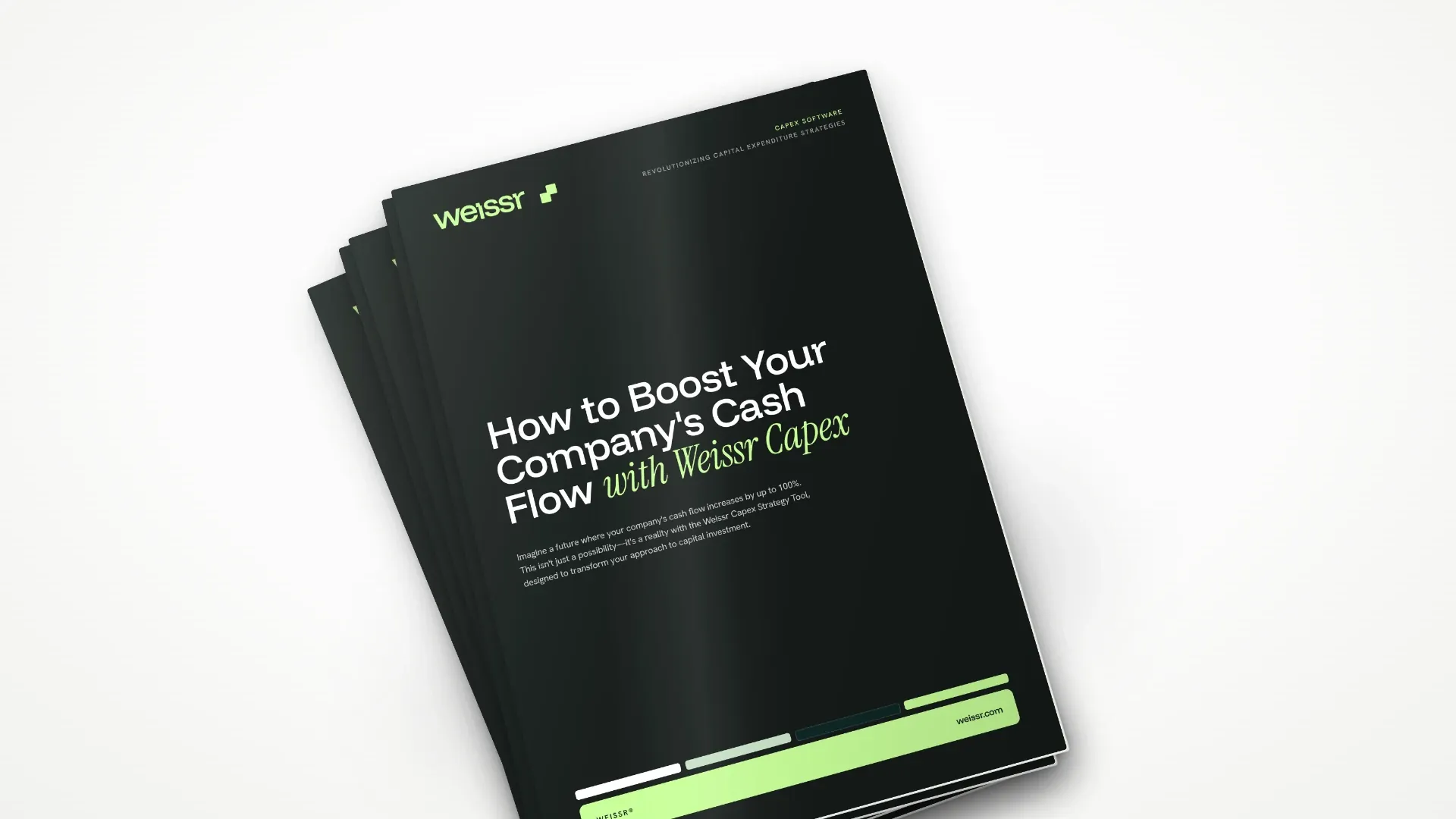
Report
Maximising Cash Flow from Capital
How allocating capital across the whole portfolio, not project by project, can lift future cash flow.
Download the report →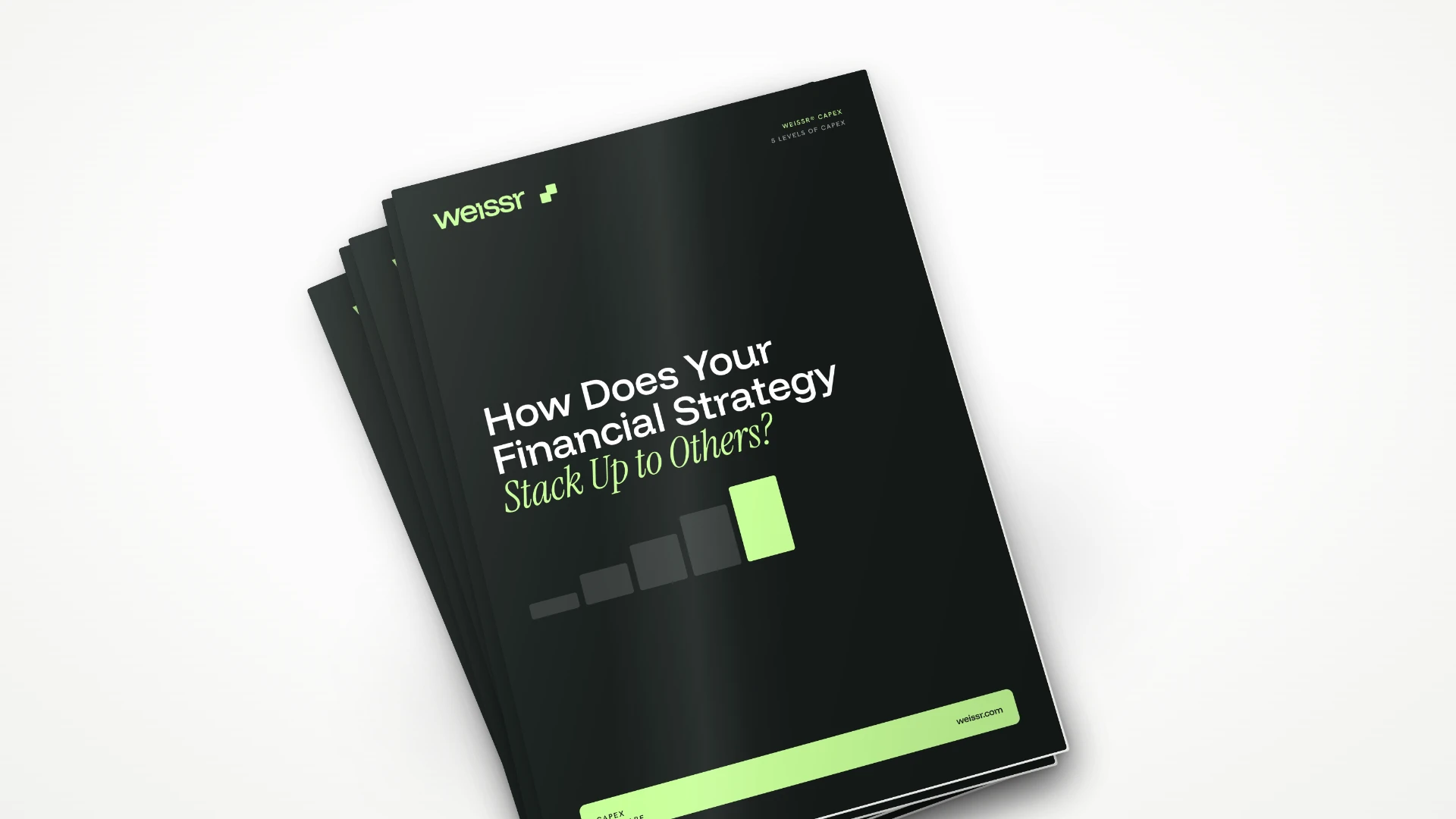
Report
5 Levels of Capex Maturity
Where your capex process stands today and what it takes to connect it to company strategy.
Download the report →Explore
Capex Strategy
Compare investment strategies and allocate capital across the portfolio.
Explore
Capital Budgeting Software
Turn the chosen direction into a funded, governed budget.
Explore
Capex Management
Follow committed capital through execution and outcomes.
Challenge
Capital allocation
Why the portfolio, not the project, is the executive question.
By role
CFO & Finance Leaders
How finance turns allocation decisions into capital plans.
Capex Maturity Assessment
What's yourCapex maturity level?
Answer a short set of questions on process, data, visibility and cash flow, and get a report showing your level in each area.
Take the assessmentExecutive questions
Capex Strategy and capital allocation FAQ
What role should the CEO play in capital allocation?
The CEO and executive team set the strategic direction that should guide capital allocation. Their role is not to evaluate every individual investment, but to ensure the overall investment portfolio supports company priorities and creates the strongest possible outcome from available capital.
How does capital allocation support corporate strategy?
Capital allocation determines which strategic priorities receive resources. Connecting investment decisions to company objectives helps ensure that capital is directed toward the initiatives most important to long-term business performance.
Why isn’t project ROI enough for Capex decisions?
A positive project ROI tells you that an investment may create value. It does not tell you whether it creates more value than competing opportunities or whether it is the best use of limited capital. Portfolio-level prioritisation allows leadership to compare investments in the context of the company as a whole.
How should companies prioritise competing investments?
Companies should evaluate investments consistently across strategic alignment, financial value, risk, timing, cash-flow requirements and other company-specific criteria. The goal is to build the strongest overall investment portfolio rather than simply approving every project that meets a minimum return threshold.
What is the difference between Capex Strategy and Capex Management?
Capex Strategy focuses on deciding where the company should invest and why. Capex Management focuses on controlling and managing those investments through requests, approvals, budgets, forecasts, implementation and follow-up. Together, they connect strategic capital allocation with execution.
How can leadership determine whether it has the right investment portfolio?
Leadership needs visibility across investment opportunities, strategic priorities, capital constraints and portfolio scenarios. Comparing alternative portfolios helps executives understand whether capital is being allocated toward the combination of investments most likely to support company strategy and long-term value creation.
Turn strategy into capital decisions
Your strategy determines where you want to go.Your capital determines
whether you get there.
Connect company strategy, investment priorities and capital allocation in one structured approach.