

Weissr
Forest products and paper industry production environment

Solutions by industry · Pulp, Paper & Forest Products

Every mill needs capital.Not every mill should get it.

In asset-intensive forest industries, an individual mill can often justify another project. Leadership still has to decide where limited capital will create the greatest long-term value across the entire asset portfolio. Weissr connects mill strategy, capital allocation, budgeting and Capex Management so those choices can be compared in one view.

Trusted by leading industrial organisations

Stora Enso logoSonoco logo

In short

What is Capex planning in the pulp and paper industry?

Capex planning in pulp and paper is about deciding where capital will create the most value across an entire portfolio of mills and converting plants, not simply assessing projects site by site.

Strategic
Capital is directed to the highest-value mills and assets, not the loudest requests.
Financial
A Global Packaging Company case identified a +40% increase in future discounted cash flow.
Operational
More than 25% less time spent assembling capex data, as seen at a Nordic saw milling group. Read the customer story

02 · Industry Capex reality

A good mill investmentcan still be the wrong company investment.

Every mill naturally has investments that improve reliability, efficiency, sustainability or capacity. Headquarters has a different responsibility: deciding where the company should invest across the whole network, given the capital actually available.

MaintainModerniseExpandConvertRun for cashExit / replace

Common challenges

Investment intake still runs as scattered spreadsheets, manually merged into one master file every planning cycle.

Approval workflows sit disconnected from the original request, so the same numbers are re-entered by hand at every stage.

Leadership needs one system from request creation through post-completion review instead of separate tools at each mill.

The result is local optimisation, with individual mills optimising for themselves rather than for company-wide long-term cash flow.

03 · Strategic decisions

See every millas part of one Capex strategy.

Mills, machines and converting assets are evaluated together, on the cash flow of the company as a whole, against the capital the company actually has.

  1. 01Mills, machines & converting assets
  2. 02Asset needs
  3. 03Strategic building blocks
  4. 04Group-wide strategic alternatives
  5. 05Optimal portfolio
  6. 06Long-term cash flow

04 · Capex Strategy

Decide where capital should go

Weissr models every credible alternative for a mill or converting asset, including invest, hold, convert and divest, against the rest of the portfolio and a “do nothing” baseline. The comparison becomes apples-to-apples across the network rather than mill-by-mill in isolation.


Explore Capex Strategy

05 · Capex Management

Deliver what the strategy decided

Inside the allocated frame, Weissr handles requests, approvals, budgets, forecasts and post-completion review in one system, instead of the manual consolidation of site files that most mills rely on today.

Explore Capex Management

06 · The asset network

The mill network,mid-optimization.

Capital flows toward the highest-value nodes, while lower-value assets are flagged for maintain, run-for-cash or exit review.

Integrated pulp mill

Modernisation vs. sustaining capital

Paper machine

Grade conversion alternative modelled

Converting plant

Capacity expansion under review

Sawmill

Reliability and automation investment

Energy & recovery

Decarbonisation pathway

Legacy asset

Run for cash / exit alternative

Weissr capital portfolio

One prioritised portfolio across the mill network

07 · Capex Strategy in practice

Real capital allocation results,published by our customers.

“We have actively deployed the Weissr approach to capital allocation and have executed investments that are creating real competitive advantage.”

Stephen Scherger

EVP & CFO, Graphic Packaging International

“It is extraordinary and nothing short of dropping a bomb in the world of capital allocation. This is not an incremental improvement. It's a radical transformation of how you allocate capital.”

John Williams

CEO, Domtar Corporation

Customer stories

Pulp, Paper & Forest Products leadersalready allocating capital this way.

Timber building under construction in sunlight
Setra Group logo
Wood Products
Setra Group logo
“Now we do it the same way every time. We have one model, and we use it regardless of the investment.”

Anders Nordmark

EVP Supply Chain and Technology

1

investment model used for every investment

Read the customer story
Paperboard cups and food boxes at a coffee shop counter
Graphic Packaging International logo
Paper & Packaging
Graphic Packaging International logo
“We have actively deployed the Weissr approach to capital allocation and have executed investments that are creating real competitive advantage.”

Stephen Scherger

EVP & CFO

+100%

potential uplift in future cash flow

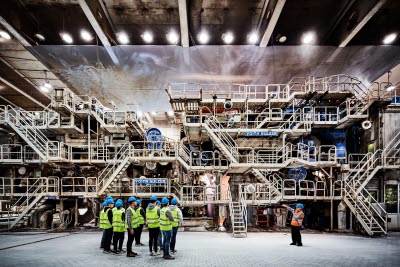
Visitors in hard hats beside a paper machine in a Holmen mill
Holmen logo
Paper & Packaging
Holmen logo
“The simplicity in the methodology has helped us focus on company cash flow and long-term strategy.”

Henrik Sjölund

President & CEO

9

strategic alternatives compared

Paperboard sandwich packs, salad bowls and a takeaway box handed over at a deli counter
Paper & Packaging

A leading European pulp, paper and packaging company moved from individual Capex strategy projects to a continuous, group-wide approach to capital allocation.

6 months

to build an in-house Capex strategy process

Read the customer story
Large paperboard roll on a paper machine inside a mill
Paper & Packaging

A global packaging company worked with Weissr to develop a long-term Capex Strategy across more than 20 pulp and paper mills and several dozen converting plants, representing a combined replacement value of more than $20 billion.

20+

mills

$20B+

replacement value

100+

strategic alternatives

+40%

projected discounted cash flow

Read the customer story
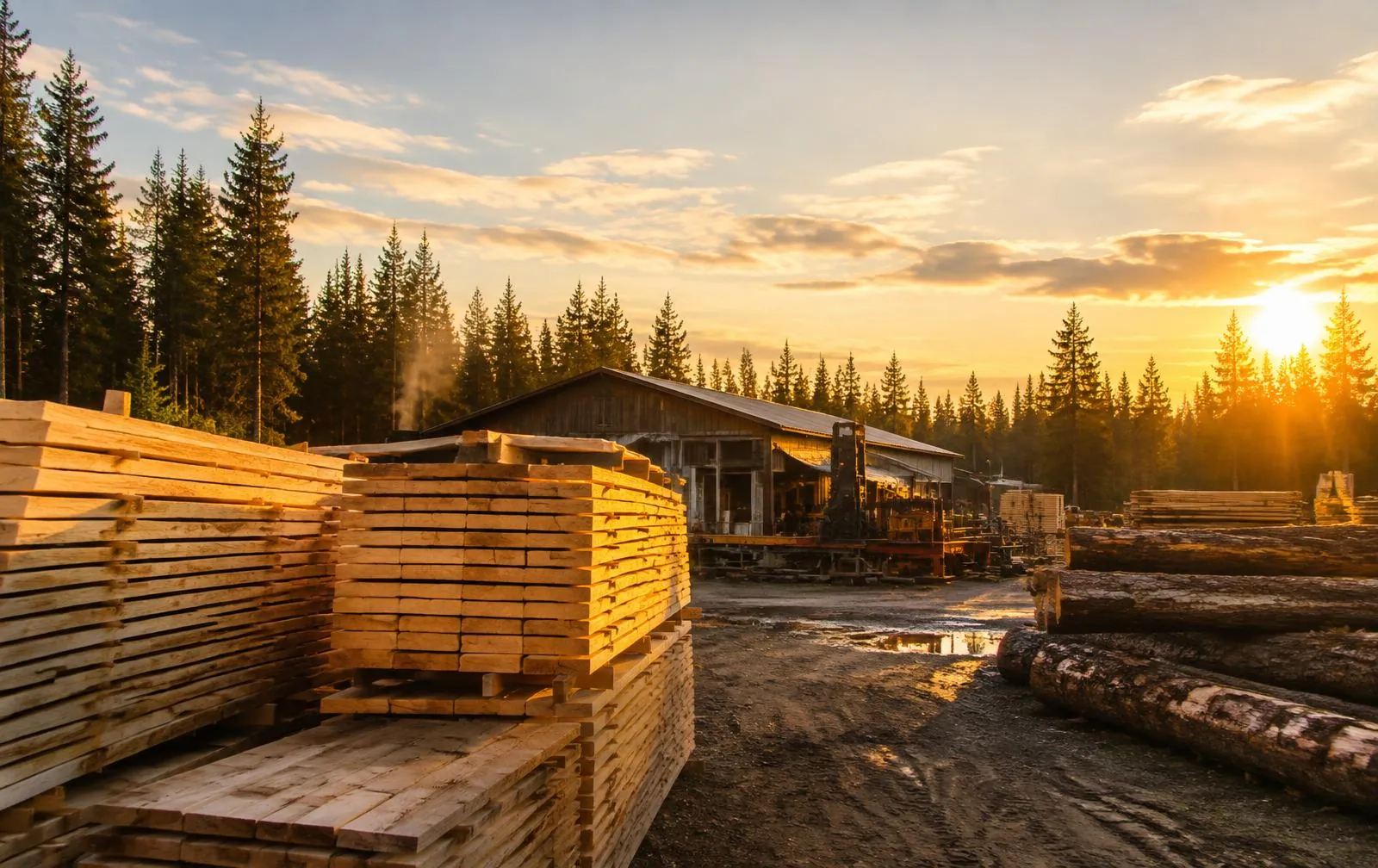
Sawn timber stacked at a Nordic sawmill at sunset
Wood Products

A leading Nordic saw milling company digitised and standardised its Capex process with Weissr, reducing time spent by more than 25% while improving the cash flow impact of its investment decisions by over 10%.

25%

less time spent

10%+

better cash flow

9 wks

to go live

Read the customer story

One platform for the capital cycle

From Capex strategyto investment execution.

01

Capex Strategy

Software solution

Decide where capital should go.

Model long-term investment alternatives across the entire asset portfolio and understand which path creates the greatest long-term value.

02

Capex Budgeting

Add-on module for Capex Management

Turn strategic priorities into capital allocation.

Reconcile strategic direction with bottom-up investment demand and allocate budgets across the organisation.

03

Capex Management

Software solution

Control what happens next.

Manage requests, budgets, approvals, forecasts and investment follow-up in one governed environment.

Capex outcomes

What changeswhen capital is allocated well.

Strategic

Capital is directed to the highest-value mills and assets, not the loudest requests.

Financial

A Global Packaging Company case identified a +40% increase in future discounted cash flow.

Operational

More than 25% less time spent assembling capex data, as seen at a Nordic saw milling group. Read the customer story

$700B+

Value of assets analysed in Weissr

1,000+

Production sites globally

ISO 27001

Certified information security

Enterprise-grade security and governance across every deployment

Capex Maturity Assessment

What's yourCapex maturity level?

Answer a short set of questions on process, data, visibility and cash flow, and get a report showing your level in each area.

Take the assessment

Capex explained

What is Capex planning in the pulp and paper industry?

Capex planning in pulp and paper is about deciding where capital will create the most value across an entire portfolio of mills and converting plants, not simply assessing projects site by site.

That perspective has become increasingly important after decades of consolidation across the global pulp and paper industry. Companies are often managing large, mature production networks where the real question is not only which projects to fund, but which sites and assets should continue to receive capital over the long term.

Historically, the industry has also seen significant investment go into sites that were later scaled back or closed. Good Capex planning therefore means looking beyond the immediate project case and comparing sustaining, modernisation, expansion, conversion and, where relevant, exit alternatives on a common financial basis across the portfolio.

Once priorities are set, those decisions then need to carry through budgeting, execution and post-completion review.

How should a pulp and paper company decide which mills get capital first?

By comparing every mill’s strategic alternatives (sustaining, modernisation, expansion, conversion, run-for-cash and exit) on one common financial basis, and then selecting the combination that creates the greatest long-term discounted cash flow within the available capital, rather than approving mill requests in isolation.

What’s the difference between Capex Strategy and Capex Management in a multi-mill business?

Capex Strategy decides where capital should go across the mill network over the long term. Capex Management governs what happens once capital is allocated: requests, approvals, budgets, forecasts, execution and post-completion review. Both are needed; they answer different questions.

How does Weissr help compare maintaining, converting or exiting a mill?

Each option is modelled as a full strategic alternative with its own investment profile, cash flows, risks and timing, then evaluated against every other alternative in the portfolio. Leadership sees the value of converting one asset versus maintaining another rather than reviewing each case separately.

How long does it take to roll out a portfolio-wide capex process across a mill network?

It depends on scope and the number of sites, but published Weissr cases include a Nordic Saw Milling Company that went from start to an operational system in nine weeks, with over 25% less time spent on capex processes afterwards.

Can Weissr model “do nothing” as a baseline alternative?

Yes. In the published Global Packaging Company case, more than 100 full-scale strategic alternatives were modelled including a do-nothing baseline, which is what makes it possible to judge whether an investment genuinely beats the alternative of not investing.

How does capital allocation change when converting a paper machine to packaging grades?

A conversion changes the asset’s future cash flows, market exposure and remaining useful life, so it must be compared against modernisation, new capacity elsewhere and divestment on the same basis, not evaluated only against the status quo of that single machine.

How does Weissr support a divisional-to-global rollout of a capex process?

One published European pulp, paper and packaging company piloted the Capex Strategy process at divisional level, then scaled globally with a six-month train-the-trainer program, divisional Capex Strategy Committees and a Group Strategy Forum.

Compare mill investmentsas one company portfolio.