
“Now we do it the same way every time. We have one model, and we use it regardless of the investment.”
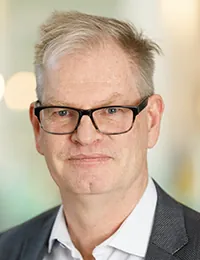
Anders Nordmark
EVP Supply Chain and Technology, Setra Group
For Anders Nordmark, EVP Supply Chain and Technology and a member of Setra’s executive management team, that consistency is one of the most important improvements. The platform provides a common way of working across the organisation, regardless of which sawmill or investment is being evaluated.
A connected process from investment proposal to follow-up
Setra’s investment process starts within the operations. An investment need is typically raised by one of the sawmills, followed by a technical review and an investment meeting. Once an investment has been approved, a project team is established and the project moves into execution. After completion, the investment is followed up against the KPIs and objectives defined at the beginning of the process.
Weissr acts as a common foundation throughout. Investments are documented, profitability is calculated, and projects can be followed through decision-making and implementation. Setra has not completely changed its decision-making process, but it now has a more consistent structure around it.
“I’m happy with the structure. We have order and control. The difference is that we now have a way of working that we use consistently.”
Anders Nordmark
EVP Supply Chain and Technology, Setra Group
From good projects to the right investments
Perhaps the most significant change has been the perspective on capital allocation itself. When Setra developed its investment strategy, the company increasingly began to look at investments as a portfolio rather than as a collection of independent projects.
An investment can have a very attractive payback when viewed in isolation at a particular sawmill. That does not automatically make it the best use of capital for the company as a whole. The analysis made it clearer that an investment in a lower-performing unit can appear particularly attractive because there is more room for improvement, while the same investment at a high-performing unit may show a less dramatic return.
That work resulted in a clearer strategy around which sites should primarily receive strategic development investments and which should be managed with a stronger focus on cash generation.
“To concentrate our investments where they create the greatest real value over time, we have chosen which sites we primarily want to develop strategically.”
Anders Nordmark
EVP Supply Chain and Technology, Setra Group
Capex Strategy creates a longer-term perspective
Within Weissr Capex Strategy, Setra works with long-term cash flows to understand how different investment alternatives affect the business over time. No one can know exactly what a cash flow will look like 20 or 30 years ahead. The value lies in applying consistent assumptions across scenarios and understanding how the alternatives differ.
“When we have worked through the different alternatives and compared them against each other, I think you know considerably more about the difference between them.”
Anders Nordmark
EVP Supply Chain and Technology, Setra Group
Bringing Capex Management and Capex Strategy together
Capex Management provides structure for the day-to-day investment process. Proposals are documented, calculations are carried out consistently, investments move through a defined approval process, and results can be followed up after implementation.
Capex Strategy lifts the perspective from the individual project to the portfolio. The question becomes not only whether a project is profitable, but how alternatives compare and where capital should go to create the greatest long-term value. Together, this connects an investment need identified at a sawmill to broader decisions about Setra’s future production structure.
Increasing the focus on results after the investment
Investment cases and project reviews before approval are already well established. The area Setra wants to strengthen further is what happens after completion: formally closing projects and carrying out consistent post-investment reviews against the results and KPIs that originally supported the decision.
This closes the loop in the Capex process: from strategy and prioritisation, through approval and execution, to verifying whether the investment actually delivered the expected value.
Not simply whether an investment is good, but whether it is a better use of capital than the alternatives.
That is where Capex Management meets Capex Strategy, and where the investment process becomes a tool for steering the company’s long-term development.