
Category A
~80%
of future total cash flow
Close to state of the art technology. Represents about half of the capacity.
White paper · The Capex process
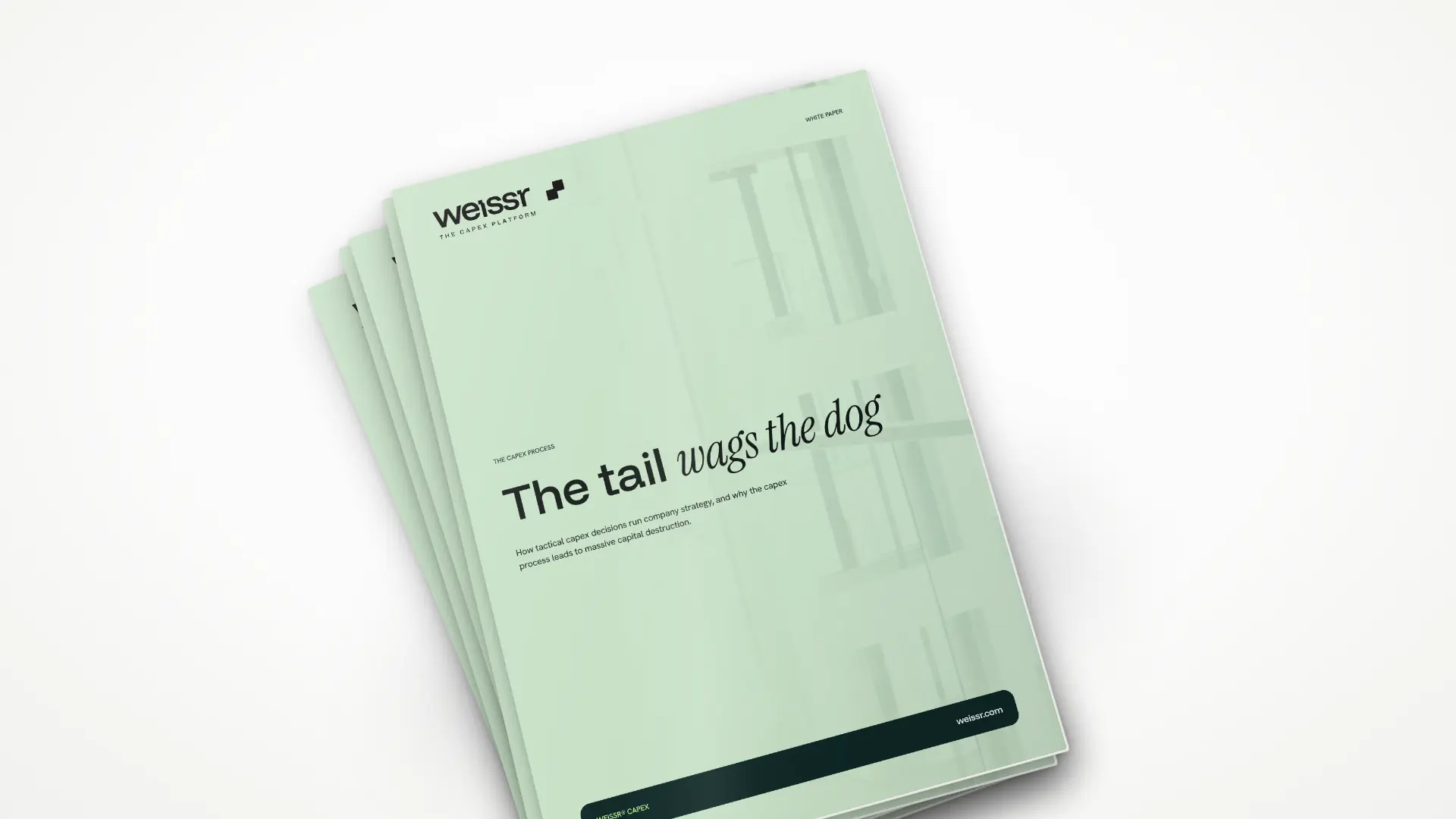
How tactical capex decisions run company strategy, and why the capex process leads to massive capital destruction.
Inside the white paper
Almost all companies in all industries evaluate capex decisions in basically the same way. The white paper describes how that process, and how universities teach us to make capex decisions, leads to massive capital destruction.
It builds on work that began in 1994 and on Asset Strategy projects in more than 500 mills and plants since 2004. The examples come from pulp and paper, but the principles apply to any capital-intensive industry.
A system of 10 mills
The white paper sorts a business of 10 mills into three categories and asks how a normal year's capex is split between them.
Category A
~80%
of future total cash flow
Close to state of the art technology. Represents about half of the capacity.
Category B
75%
of the capital
Aging assets with a growing technology gap, often with environmental and safety issues.
Category C
3–5%
of the capital
The mill the company expects to close within one to three years.
Categories B and C get 95% of management attention. In the authors' experience, a company loses a value of at least 30% of its capexes every year.
Why it goes wrong
The first two are present in all companies, and they have to be there. The third can be thrown out today.
From the white paper
"The calculated payback simply never happens, even if assumptions turn out to be true in the future."
The capex process is so strong that it sets the strategy for the assets. When the capex process determines the strategy, the white paper calls it "the tail wags the dog". Every company that invests in fixed assets needs an Asset Strategy that governs capex allocation.
Contents
What really creates a short payback?
The tail wags the dog: how tactical capex decisions run company strategy
The "creative destruction" funnel
Continue exploring
See how Weissr Capex Strategy compares strategic alternatives for the whole asset base before projects enter the capex process.